META TAG ANALYZER
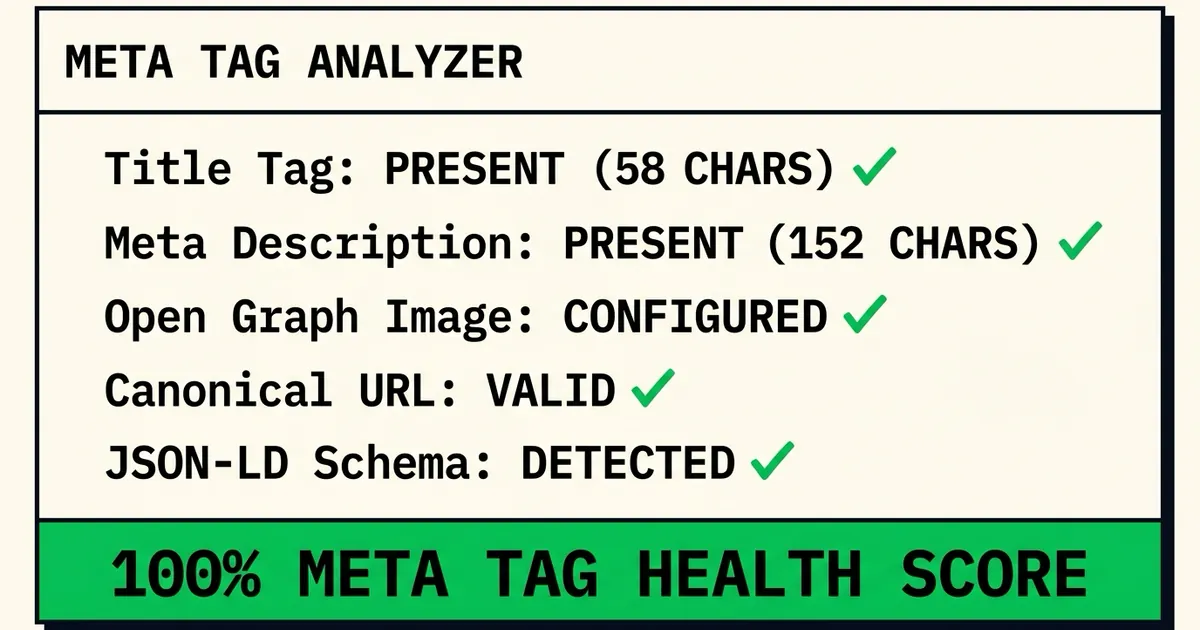
Audit your webpage's header tags in real time. Validate standard SEO length requirements and check if your Open Graph protocol elements are correctly configured for social platforms and AI summary parsers.
Enter a website URL to audit
its HTML header meta tags.
FREQUENTLY ASKED
What meta tags does Google actually use?
Google actively respects the Title tag, Meta Description tag, Canonical link tag, and Robots meta tag (like noindex/nofollow). Google does not use Meta Keywords for ranking, and Open Graph or Twitter Card tags are ignored for search rankings but used for social snippet rendering.
How long should my title tag be?
Title tags should ideally be between 50 and 60 characters long. Staying in this range ensures Google doesn't truncate your titles in the search results page. Shorter titles may not provide enough semantic weight for search intent indexing.
What is Open Graph and why does it matter?
Open Graph is a metadata protocol introduced by Facebook that allows web pages to become rich objects in social graphs. Defining og:title, og:description, and og:image tags ensures that when your page is shared on LinkedIn, Slack, Facebook, or WhatsApp, it renders as a highly engaging preview card rather than a plain link.
Does having a Twitter Card help SEO?
Twitter Cards do not directly affect your traditional Google SEO ranking. However, they are essential for social SEO. Rich media cards on X/Twitter increase your click-through rates, likes, and reposts, bringing more organic referral traffic to your site.
What is a canonical tag and when do I need one?
A canonical tag (rel="canonical") tells search engines which version of a URL is the primary master copy. You need one on every page to prevent duplicate content issues arising from parameter tracking URLs (e.g. ?utm_source=...), protocol mismatches, or trailing slashes.
How do meta tags affect AI search results?
AI search engines (like ChatGPT and Perplexity) read standard meta tags to construct quick summaries of a page. Additionally, structured schema markup and a clean title/description hierarchy help AI crawlers map page entities correctly during RAG indexing.